
Salkantay Trek to Machu Picchu: 5-Day vs 4-Day Itinerary, Difficulty & Costs (2026)
The Salkantay Trek is the most spectacular route to Machu Picchu that doesn’t require an Inca Trail permit. Over 74 kilometers through some of the most dramatic Andean scenery on earth — glaciated peaks, cloud forests, tropical river valleys, and finally the Lost City itself — it earns its reputation as one of the world’s great treks.
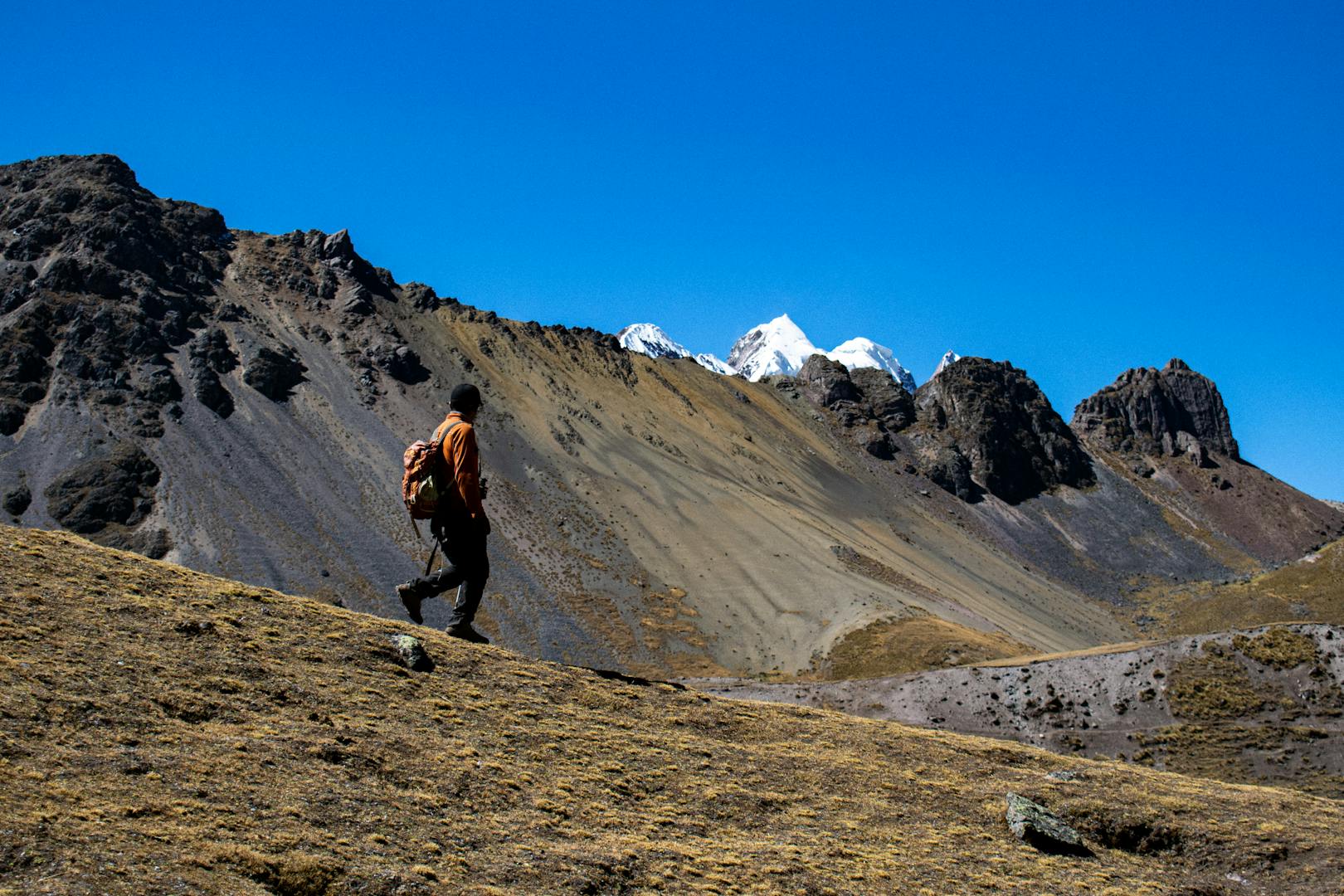
Unlike the Inca Trail, the Salkantay has no permit quota. Unlike a train-and-bus day trip, it gives you four or five days of genuine immersion in the landscape. And unlike most “alternative treks,” it actually delivers on the promise: the crossing of the Salkantay Pass at 4,600 meters, with the Salkantay glacier looming overhead, is the kind of moment you travel halfway across the world to experience.
This guide covers everything for 2026: the complete itinerary (5-day and 4-day options), honest difficulty assessment, altitude preparation, costs, and how to book.
What Is the Salkantay Trek?
The Salkantay Trek is a multi-day high-altitude trek in the Cusco region of Peru that connects the Salkantay mountain range to Machu Picchu. The classic route starts at Soraypampa (near Humantay Lake) and ends at Aguas Calientes, from where you take a bus up to Machu Picchu.
Key facts:
- Total distance: ~74 km
- Highest point: Salkantay Pass — 4,600m (15,091ft)
- Route: Soraypampa → Salkantay Pass → Chaullay → La Playa → Aguas Calientes → Machu Picchu
- Duration: 4 days trekking + 1 day Machu Picchu (5 days total) or 3 days trekking + 1 day Machu Picchu (4 days total)
- Permit required: No — unlike the Inca Trail, the Salkantay route does not have a quota
- Difficulty: Strenuous
The trek passes through an extraordinary range of ecosystems — Andean puna (high-altitude grassland), cloud forest, and subtropical jungle — as it descends from 4,600m to around 2,000m before climbing back up to Machu Picchu at 2,430m.
The highest point, Salkantay Pass, is crossed on day 2. The pass sits beneath the Salkantay glacier (Nevado Salkantay: 6,271m) and offers one of the most dramatic alpine views in Peru.
5-Day vs 4-Day Salkantay Trek: Which Should You Choose?
| Feature | 5-Day Trek | 4-Day Trek |
|---|---|---|
| Hiking days | 4 days trekking + 1 Machu Picchu | 3 days trekking + 1 Machu Picchu |
| Daily distance | ~15–20 km/day | ~20–25 km/day |
| Pace | More relaxed | Strenuous each day |
| Rest time | More camp time, easier rhythm | Minimal |
| Best for | Most travelers, first-time trekkers | Very fit, experienced hikers |
| Cost | Slightly higher | Slightly lower |
Our recommendation: The 5-day version is the right choice for most travelers. The Salkantay Trek is physically demanding regardless of format — the altitude, the daily distances, and the terrain add up. The extra day dramatically improves the experience: you’re not racing through the cloud forest and have energy left when you arrive at Machu Picchu.
The 4-day version suits experienced trekkers who are already well-acclimatized, physically very fit, and comfortable with 20+ km days at altitude.
Full 5-Day Salkantay Trek Itinerary
Day 1 — Cusco to Soraypampa (camp at 3,900m)
Depart Cusco at approximately 5:00–5:30 AM for the 3-hour drive to Soraypampa, the trailhead at 3,900m. Many groups stop briefly at Humantay Lake (4,200m) — a stunning turquoise glacial lake just 2 km from the trailhead — before making camp.
The afternoon is light: set up camp, acclimatize, and rest for the big day ahead. Soraypampa sits in an open meadow with direct views of the Humantay glacier. Weather is often clearest in the morning.
Distance: 5–8 km | Elevation: ~3,900m camp
Day 2 — Salkantay Pass (4,600m) to Chaullay (2,900m)
The hardest and most memorable day of the trek. An early start (4:30–5:00 AM) to cross the Salkantay Pass before the afternoon clouds roll in.
The ascent to 4,600m takes 3–4 hours, gaining over 700m in elevation. The final approach to the pass is steep, rocky, and breathtaking — the Salkantay glacier towers above, and on clear days the views extend across multiple mountain ranges.
The descent from the pass is equally dramatic: from alpine tundra to cloud forest in a single afternoon, losing nearly 2,000m of elevation as the vegetation transforms around you. Camp is at Chaullay or Wayraqmachay (~2,900m).
Distance: ~20 km | Elevation: 4,600m (pass), 2,900m (camp)
Day 3 — Chaullay to La Playa (2,300m)
A more moderate day through cloud forest and subtropical vegetation. The terrain is greener, the air warmer, and the altitude noticeably lower — most trekkers feel significantly better on day 3 than day 2.
The trail follows river valleys through small agricultural communities. Lunch is typically at a local community, and the afternoon brings a pleasant descent to La Playa (~2,300m).
Distance: ~18 km | Elevation: 2,300m camp
Day 4 — La Playa to Aguas Calientes
The final trekking day follows the Urubamba river valley toward Aguas Calientes. Most groups take a short vehicle transfer for part of this section (to Santa Teresa or Hydroeléctrica) before the final 2–3 hour walk along the train tracks to Aguas Calientes.
Arrival in Aguas Calientes in the early afternoon gives time to soak in the thermal baths (highly recommended after 3 days of trekking), explore the village, and rest before the Machu Picchu day.
Distance: ~14 km (+ transfer) | Elevation: 2,040m (Aguas Calientes)
Day 5 — Machu Picchu
The reason you came. Bus departs from Aguas Calientes at 5:30–6:00 AM for the 20-minute switchback road to the Machu Picchu entrance (2,430m). Your guide leads a 2–3 hour tour of the citadel.
Optional extensions: hike Machu Picchu Mountain (3,082m, additional ticket required) for panoramic views over the entire site, or explore Sun Gate (Inti Punku) — the original Inca Trail entrance with its iconic aerial view of Machu Picchu.
Return to Cusco by bus + train + transfer, arriving evening.
Total day: 10–12 hours | Elevation: 2,430m
Full 4-Day Salkantay Trek Itinerary
The 4-day version compresses the route:
- Day 1: Cusco to Salkantay Pass crossing — a very long day starting before dawn, driving to the trailhead and crossing the pass to camp at Chaullay (~20km+)
- Day 2: Chaullay through cloud forest to La Playa and beyond, toward Aguas Calientes entry
- Day 3: Arrival in Aguas Calientes; afternoon rest
- Day 4: Machu Picchu
This format demands significantly higher daily distances and doesn’t allow acclimatization time at Soraypampa. Only recommended for very fit, experienced hikers who are already well-acclimatized to altitude in Cusco.
Difficulty & Fitness Requirements
The Salkantay Trek is rated strenuous. This is an honest assessment — not a deterrent, but an accurate expectation.
What makes it strenuous:
- 74 km total distance over 4 trekking days
- Crossing of the 4,600m Salkantay Pass on Day 2
- Significant elevation gain and loss throughout
- Variable terrain: snow, rock, mud, forest paths
- Camping in cold conditions at high altitude
Who can do it: Most healthy adults who train adequately beforehand and acclimatize in Cusco for at least 2–3 days. You don’t need to be an athlete, but you should be comfortable walking 15–20 km per day on uneven terrain.
Who should be cautious: People with heart or lung conditions, anyone arriving directly from sea level, and those who haven’t been physically active in the months before the trip.
Training recommendation: In the 4–6 weeks before the trek, build up to 15–20 km walks with elevation change. Stair climbing, hiking, and general cardio make the Salkantay significantly more enjoyable.
Altitude & Acclimatization
The 4,600m Salkantay Pass is the highest point of the trek and the critical altitude challenge. For comparison: this is higher than Humantay Lake (4,200m), similar to Rainbow Mountain’s trailhead, and significantly higher than Cusco (3,400m).
Essential acclimatization strategy:
- Arrive in Cusco at least 2–3 days before Day 1 of the trek
- Consider a warm-up hike: Humantay Lake on Day 2 in Cusco is an ideal altitude test at 4,200m
- Drink 3–4 liters of water daily from arrival in Cusco
- Avoid alcohol for the first 48 hours in Cusco
- Eat lightly; heavy meals worsen altitude symptoms
- Coca tea is widely available and helpful for many people
- Consult your doctor about acetazolamide (Diamox) if you have altitude concerns
The good news: after the Day 2 pass crossing, the trek descends dramatically and altitude stops being a factor. Days 3 and 4 feel progressively easier as you drop into the cloud forest and valley.
Salkantay Trek vs Inca Trail
| Feature | Salkantay Trek | Classic Inca Trail |
|---|---|---|
| Distance | ~74 km | ~43 km |
| Duration | 4–5 days | 4 days |
| Highest point | 4,600m | 4,215m (Dead Woman’s Pass) |
| Permit required | No | Yes — limited quota |
| Scenery | Glacier, cloud forest, jungle | Inca ruins, mountain passes |
| Inca ruins en route | Minimal | Multiple significant sites |
| Difficulty | Strenuous | Strenuous |
| Availability | Year-round, no quota | Books out months in advance |
| Cost | Generally lower | Generally higher |
Choose Salkantay if: You couldn’t get Inca Trail permits, you want longer distance and more varied scenery, or you prefer not to deal with permit logistics.
Choose Inca Trail if: The Inca archaeological sites along the route are a priority, and you can book permits 4–6 months in advance.
Best Time to Visit
Dry season (May–October): Best conditions for the Salkantay. Clear skies at the pass, dry trails, reliable camping. June and July are peak months.
Wet season (November–April): The lower sections (cloud forest, jungle) can be beautiful and lush, but the Salkantay Pass section frequently has snow, rain, and reduced visibility. Trails become muddy. December–February is heaviest.
Sweet spots: May (stunning green post-rainy-season landscape with clearing skies) and September–October (reliable dry weather, smaller groups).
What to Pack
Clothing:
- Warm thermal base layers (the pass can be below zero at 4,600m)
- Mid layer: fleece or down jacket
- Waterproof shell jacket and pants
- Hiking pants and comfortable camp clothes
- Hiking boots — broken in, waterproof, ankle support
- Trekking sandals or camp shoes for evenings
- Warm hat, gloves, balaclava for the pass day
- Sunglasses and sunscreen SPF 50+
Gear:
- Quality sleeping bag rated to at least 0°C (or -5°C for cold sleepers)
- Trekking poles — strongly recommended for the pass descent
- Day pack (your main bag goes with pack horses or support vehicle)
- Headlamp with spare batteries
- Water bottle + purification tablets or filter
- Electrolyte powder or tablets
Health & Other:
- Altitude sickness medication if prescribed
- Ibuprofen, blister treatment, anti-diarrheal
- Sunscreen, lip balm with SPF
- Passport (required for Machu Picchu entry and train)
- Cash in Peruvian soles for tips and extras in Aguas Calientes
Cost in 2026
| Tier | Price (per person) | What’s typically included |
|---|---|---|
| Budget | $150–$250 | Transport, guide, camping, basic meals, Machu Picchu entry |
| Mid-range | $280–$450 | + Smaller groups, better camps/lodges, quality meals |
| Premium (lodges) | $500–$900 | Full lodge accommodation throughout, premium meals, private guide |
Always confirm what’s included — train from Aguas Calientes back to Cusco, tips, and personal spending in Aguas Calientes are typically not included in budget tours.
How to Book Your Salkantay Trek
At Viajes Peru Tour, our Salkantay Trek packages depart from Cusco with experienced bilingual guides, full logistical support, and genuine attention to altitude safety. We offer both 4-day and 5-day formats, with accommodation options ranging from tents to lodge upgrades.
Our Salkantay Trek includes: hotel pickup, transport to trailhead, all meals from Day 1, camping/lodge accommodation, support vehicle, bilingual guide, Machu Picchu guided tour, and train return to Cusco.
👉 [Check Salkantay Trek availability and book your spot →]
Also worth reading: Humantay Lake Day Trip from Cusco | Short Inca Trail 2-Day Trek | Machu Picchu Full Day from Cusco
Frequently Asked Questions
Do you need a permit for the Salkantay Trek?
No. Unlike the Classic Inca Trail, the Salkantay route has no permit quota or reservation system. You can book your Salkantay Trek up to the day before departure, though we recommend booking at least a few weeks in advance to secure your preferred dates.
How difficult is the Salkantay Trek?
Strenuous. The combination of 74 km total distance, crossing of the 4,600m Salkantay Pass, and camping at altitude makes this a demanding multi-day trek. Most fit adults who acclimatize properly and train in advance complete it successfully.
Is 4 days or 5 days better for the Salkantay Trek?
5 days is better for most travelers. The extra day adds acclimatization time, reduces daily distances, and means you arrive at Machu Picchu with energy to enjoy it. The 4-day option suits very fit, experienced high-altitude hikers.
What is the highest point of the Salkantay Trek?
The Salkantay Pass at 4,600m (15,091ft), crossed on Day 2 of the 5-day itinerary. This is the hardest section of the entire trek and the main altitude challenge.
Is Salkantay Trek better than the Inca Trail?
Different, not better. The Salkantay offers more dramatic alpine scenery (glacier, cloud forest, jungle) and no permit quota. The Inca Trail features more Inca ruins along the route and the iconic Sun Gate entry to Machu Picchu. Both are extraordinary experiences.
Ready to Hike the Salkantay Trek?
The Salkantay Trek is one of those experiences that recalibrates your sense of what’s possible in a single week. The glacier crossing, the descent into cloud forest, the arrival in Aguas Calientes after days of trekking — and then Machu Picchu itself — it’s the complete Andean experience.
Go with the right team, take the 5-day option, and acclimatize properly in Cusco first. Do that, and this becomes one of the best decisions you make in Peru.
At Viajes Peru Tour, we’ve been running Salkantay Treks for years. Small groups, experienced local guides, and the right pace to make it memorable.
Book your Salkantay Trek to Machu Picchu →
Last updated: May 2026 | Written by the Viajes Peru Tour team