
Chinchero, Peru: Weaving, Ruins & the “Birthplace of the Rainbow” (2026)
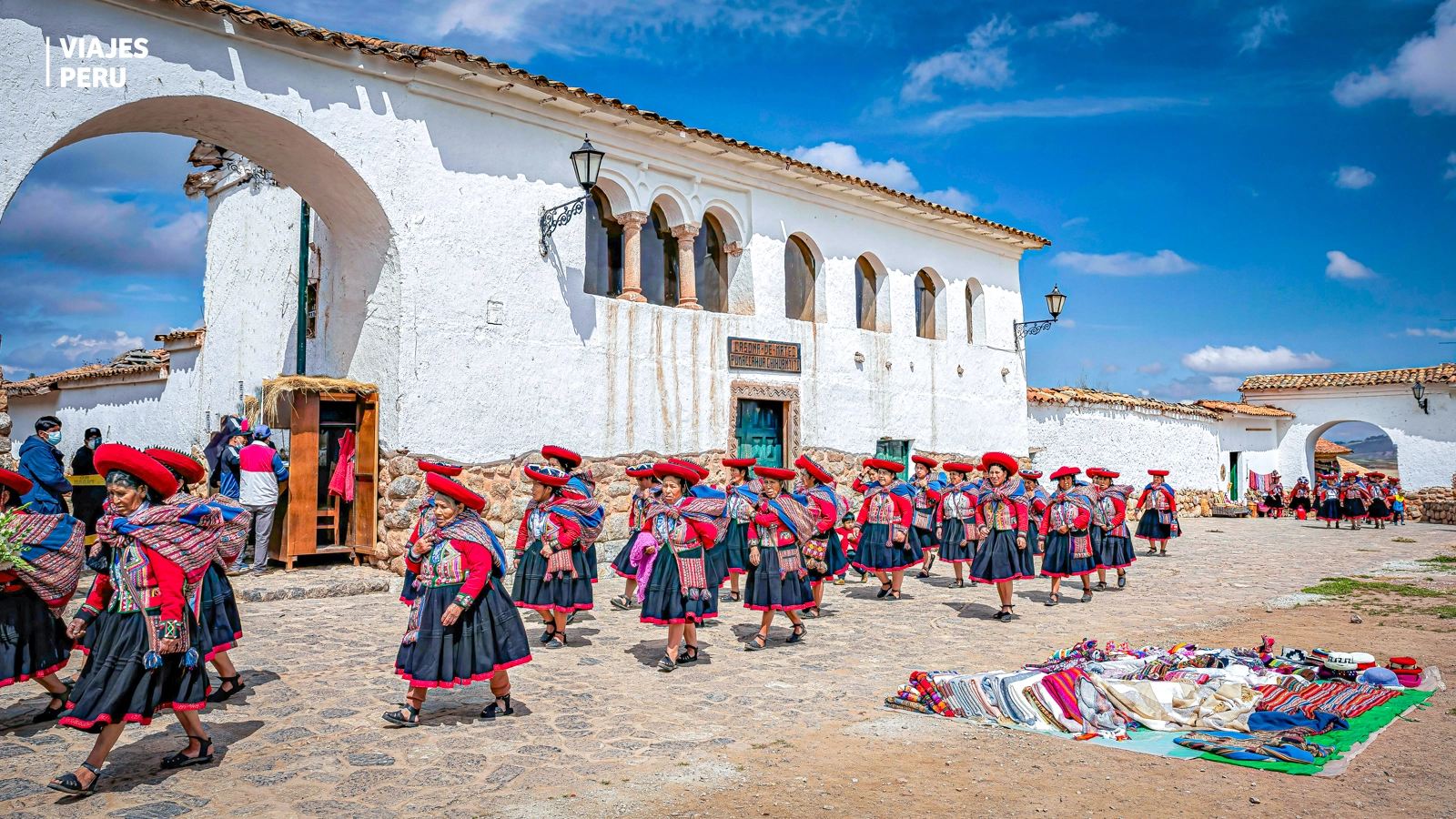
High on the plateau above the Sacred Valley — actually higher than Cusco — sits Chinchero, a traditional Andean town the Inca called the “birthplace of the rainbow.” It’s the best place near Cusco to see living weaving traditions, alongside Inca terraces, a whitewashed colonial church built on Inca foundations, and one of the region’s most authentic markets.
Here’s what makes Chinchero worth a stop.
Quick Answer
- What: a traditional weaving town on the Sacred Valley’s high plateau (~3,760 m).
- Famous for: living Inca-descended textile traditions, Inca terraces, a colonial church on Inca walls, and its market.
- Market day: Sunday is the big traditional market, but weaving centers welcome visitors daily.
- Ticket: the ruins/church are covered by the Cusco Tourist Ticket (Boleto Turístico).
- Altitude: higher than Cusco — acclimatize first.
The Weaving Tradition
Chinchero is the heart of Andean weaving. At the town’s weaving cooperatives, local women demonstrate the whole process: washing wool with a natural root “soap,” dyeing it with cochineal (the red from insects), plants and minerals, and weaving intricate patterns on backstrap looms — techniques passed down since Inca times. It’s a genuine cultural encounter (and a good, fair place to buy textiles directly from the makers).
Ruins, Church & Terraces
- Inca terraces cascade below the town — grand agricultural platforms still in use.
- The colonial church (Iglesia de Chinchero) sits on Inca foundations and is famous for its painted interior; it’s one of the oldest churches in the region.
- The main plaza and old Inca walls anchor the historic center.
The Market
Chinchero’s Sunday market is one of the more traditional in the region, where highland communities still come to trade. It’s less polished than Pisac’s, which is part of the appeal. Textiles, produce and crafts change hands in a genuinely local setting.
Tickets & How to Visit
- Entry: the archaeological site and church are covered by the Cusco Tourist Ticket (Boleto Turístico); weaving-center visits are usually free (with the expectation you may buy something).
- Location: about 30 km from Cusco, often the first or last stop on a Sacred Valley tour.
- Altitude: at ~3,760 m it’s higher than Cusco, so it fits best once you’ve acclimatized.
- Airport note: Chinchero is the site of Cusco’s new international airport project — worth knowing, as the area is changing.
How Chinchero Fits Your Trip
Chinchero is typically combined with the rest of the Sacred Valley — most often paired with Maras & Moray, and with Pisac and Ollantaytambo to complete the valley. Because it’s high, treat it as an acclimatization-friendly cultural stop rather than a first-day-off-the-plane outing — see our altitude sickness in Cusco guide and how many days to spend in Cusco.
How to Book
At Viajes Peru Tour we include Chinchero on our Sacred Valley itineraries, with a stop at a genuine weaving cooperative and a guide who explains the textiles, church and terraces. Tell us your dates and whether you want the Sunday market.
[Plan a Sacred Valley tour with Chinchero →]
Frequently Asked Questions
What is Chinchero known for?
Chinchero is the Sacred Valley’s weaving town — famous for living Inca textile traditions, its Inca terraces, a colonial church on Inca foundations, and a traditional Sunday market. The Inca considered it the birthplace of the rainbow.
When is the Chinchero market?
The main traditional market is on Sunday, though weaving cooperatives welcome visitors every day.
Do I need a ticket for Chinchero?
The archaeological site and church are covered by the Cusco Tourist Ticket (Boleto Turístico). Visiting a weaving center is generally free, with the expectation you may buy textiles.
How high is Chinchero?
About 3,760 m — higher than Cusco — so it’s best visited once you’ve started acclimatizing.
How do I get to Chinchero?
It’s about 30 km from Cusco, usually included as a stop on a Sacred Valley tour (often the first or last stop of the day).
*Last updated: September 2026 | Written by the Viajes Peru Tour team*